
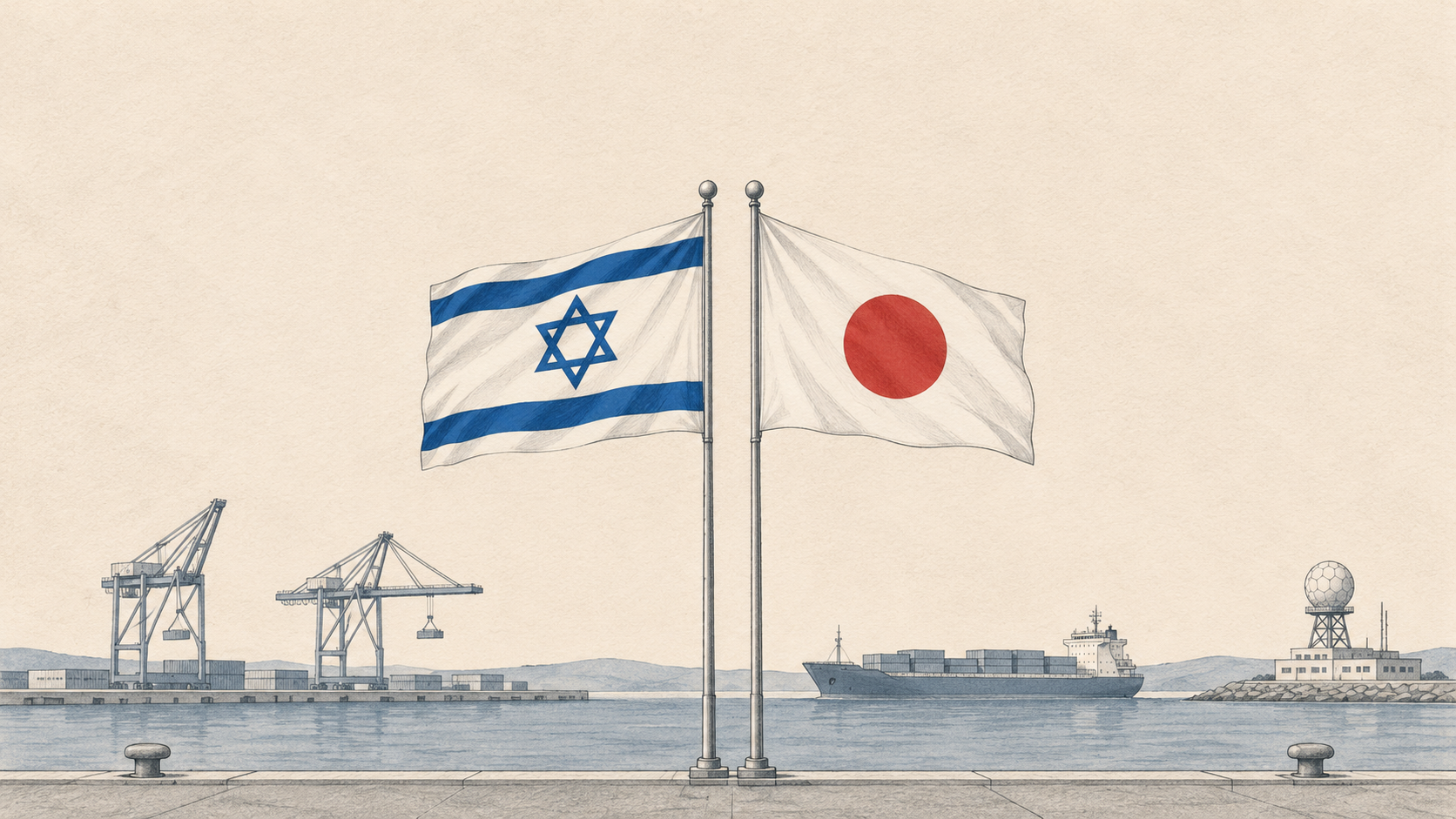
We meet on 11 November, the anniversary of the 1918 armistice. The Allies won the First World War, but the democracies failed to preserve the peace negotiated at Versailles. They did not sustain the cooperation and military readiness needed to resist renewed aggression. That failure reminds us why free nations, including Japan and Israel, must stand together.
Japan’s defense white paper describes Iranian-designed drones being used by Russia against Ukraine, and North Korea supplying Russia with weapons and troops. It warns that North Korea can improve its military capabilities through experience gained there. Weapons and tactics developed in one region can become threats in another.
Israel can offer Japan valuable experience in defending against sustained missile and drone attacks. Air defense protects people, but also keeps a country functioning. Protecting airbases allows aircraft to operate. Protecting power stations and ports keeps electricity, fuel and supplies available. Effective air defense makes it harder for an enemy to force political concessions by attacking civilians and essential infrastructure.
Iron Dome, David’s Sling and Arrow provide different layers of protection. Their effectiveness depends on radars, command networks, trained crews and reliable interceptor supplies working together. Israel can share experience in operating these elements during prolonged attacks, including the difficulties encountered.
Cost and supply matter too. Repeated attacks by cheap drones can exhaust a defender’s stocks of interceptors if every interception requires an expensive missile. Israel developed Iron Beam partly to address that imbalance. The first system was delivered to the IDF last December. Laser interception is intended to lower the cost of engaging some threats and preserve missiles for targets that require them.
We must also draw lessons from our failures. October 7 showed the danger of relying on technology while misjudging an enemy’s intentions and preparations. Equipment cannot compensate for an incorrect assessment of what the enemy is planning.
Operational lessons must reach engineers quickly. If equipment proves vulnerable to interference or difficult to repair, developers need to address those problems. Israel’s defense establishment works closely with manufacturers and startups to do so. Cooperation with Japan can include testing systems against Japanese requirements, adapting them to equipment already in service, and developing or producing components together.
Other democracies already benefit from such partnerships. Germany received its first operational Arrow 3 capability last December. Finland selected David’s Sling. Both systems were developed jointly with the United States. These projects demonstrate how Israeli experience and American participation can help meet another country’s defense needs.
Israel also contributes through action against threats that affect countries beyond our borders. Iran’s missile forces and the armed groups it supports have threatened Israel, Arab countries and commercial shipping. Japan has a direct interest in protecting the sea routes carrying its energy and trade. Preventing Iran from acquiring nuclear weapons also matters beyond Israel, because nuclear weapons would make responding to Iranian aggression much more dangerous.
In this year’s joint campaign with the United States, Israel attacked Iranian missile launchers and production facilities. These operations defended Israel while targeting capabilities that threaten other countries too.
But destroying weapons does not prevent their replacement. Governments must cooperate to disrupt illicit arms transfers, restrict access to missile components and cut off financing for armed groups, with effective enforcement at borders and ports. These diplomatic efforts help prevent armed groups from rebuilding the capabilities that soldiers have fought to destroy.
Diplomacy also creates opportunities to reduce hostility. The Abraham Accords established relations between Israel and Arab partners, including the United Arab Emirates and Bahrain. Direct diplomatic channels help governments address threats and resolve problems; trade and investment give them additional reasons to cooperate. Japan can encourage further normalization and support projects involving Israeli and Arab partners. A more stable Middle East serves Japan’s economic security.
For our own partnership, I propose regular exchanges on protecting infrastructure and sustaining defense during a long conflict. We should pursue a small number of joint technology projects with agreed tests and delivery schedules. We should also coordinate with the United States on equipment compatibility, research and production capacity.
Israel brings technology tested under fire and lessons learned at a heavy price. Japan brings the engineering expertise and industrial capacity to translate that experience into effective defenses. Together with the United States, we can help fellow democracies deter aggression and protect their citizens.
The collapse of collective security after Versailles showed the cost of leaving aggression unanswered. A lasting peace requires democracies strong enough to defend themselves—and united enough to stand by one another.
Leave a Reply